Settled
You can think, talk and rest. Food, sleep and plans feel doable.
Nervous system
Nervous system regulation is your ability to move between alert and calm, and find your way back after stress. You can't think your way there. You get there through the body, one small step at a time.
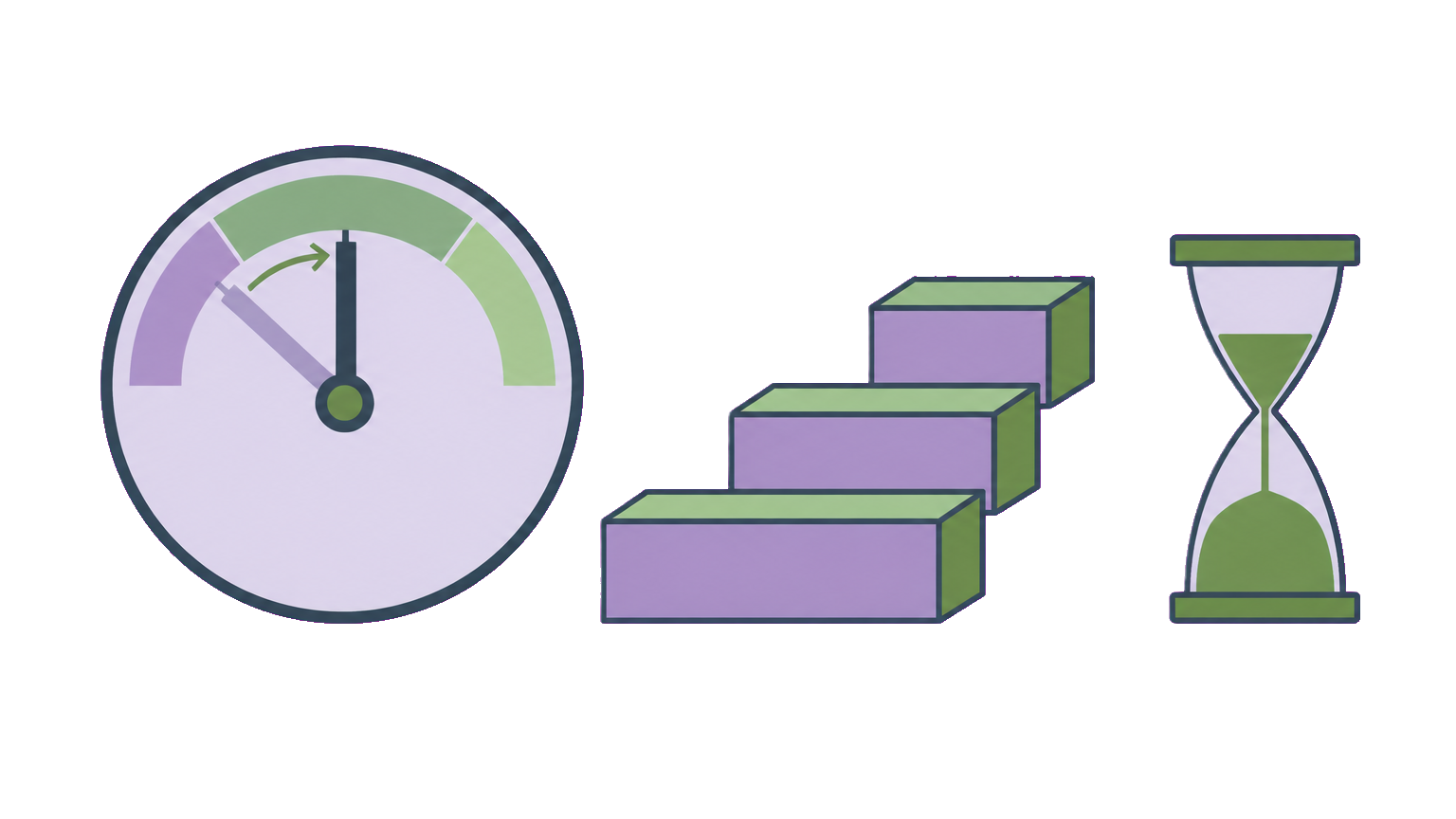
Take the free check-inMost days you'll be in one of three broad states. None of them is wrong. Each one asks for something different.
You can think, talk and rest. Food, sleep and plans feel doable.
Racing thoughts, tight jaw or shoulders, short temper, hard to switch off.
Flat, foggy, heavy. Everything feels like too much, so you do nothing.
Name where you are before you try to fix it. A rough read (settled, revved up or shut down) is enough. People who label how they feel tend to recover from stress faster than people who push through.
Slow breathing, around six breaths a minute with an out-breath longer than the in-breath, is one of the best-studied ways to bring arousal down. Try it for two to five minutes.
Revved up: walk, shake out your arms, climb some stairs. Shut down: stand up, stretch, splash cold water, step into daylight. Match the move to the state.
Look slowly around the room and name a few things you see. It tells your body you're not in danger right now.
On a revved-up or shut-down day, do the smallest version of your plan. Keeping a short list beats abandoning a long one.
Regulation is a skill built by repetition. A morning and evening check-in shows you your pattern over weeks, not just one bad afternoon.
Sleep plans, supplement stacks, GLP-1 routines and training blocks all assume you have the same capacity every day. You don't. In the Protocols app, a short check-in comes first. On a settled day you get your full list. On a hard day you get the smallest version, so you keep going instead of quitting.
Want more? Read about the sleep protocol or see how it works.
It's your ability to shift between alert and calm when you need to, and come back to a settled baseline after stress. It doesn't mean being calm all the time.
Common signs are trouble sleeping, feeling wired or numb for long stretches, snapping at small things, or struggling to rest even when you have time. A daily check-in helps you spot the pattern.
Breathing and movement can shift how you feel within minutes. Building a steadier baseline usually takes weeks of small, repeated practice.
No. These are everyday self-care practices. If you're struggling with anxiety, trauma, panic or low mood, talk to a doctor or qualified therapist.
Free · two minutes
Answer a few quick questions about your body, energy and sleep. See where you are today and get a day sized to match. No card needed.
Take the free check-inSelf-care support, not diagnosis or treatment. If you're in crisis, contact local emergency services.