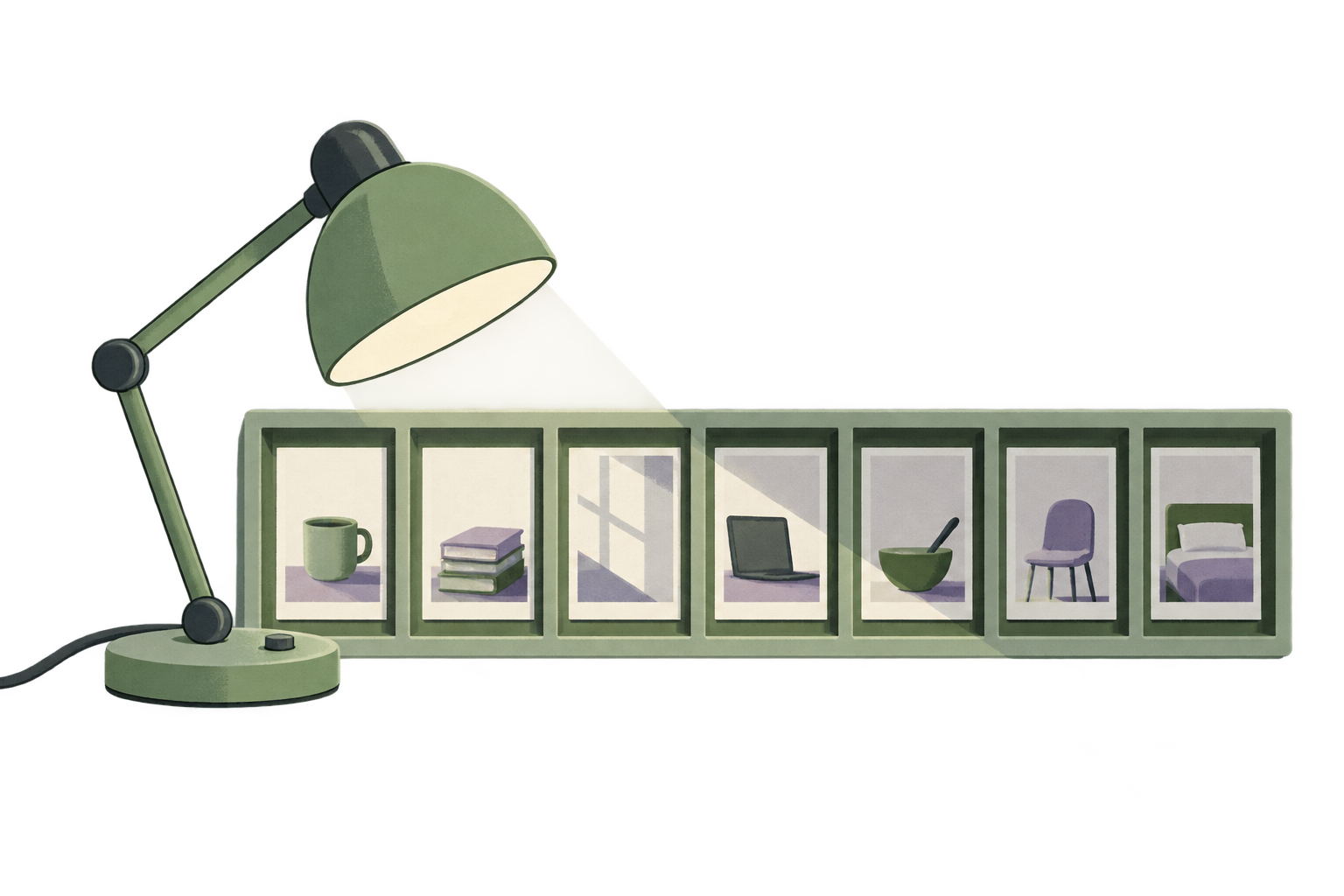
I used to think a stable routine made a daily check in pointless. I now think the stable routine is exactly why it's worth doing: keeping the routine steady makes changes in how you feel easier to notice. Same 6.30 alarm, same eggs, same supplements by the kettle, and on Monday you feel sharp while on Thursday you can't finish a sentence. The routine's been very consistent.
You do everything right and still feel off. Your usual run feels harder, the same 2pm meeting leaves you wiped where last week it didn't, and you can't finish a sentence without starting again. You lie down at 10.30, wide awake, heart going a bit fast, and type “why am I tired but can't sleep” into your phone. By morning, you're searching “tired despite enough sleep” or “why do I feel off” while the supplements sit beside the kettle exactly where they always sit. Nothing obvious in the routine changed. You start wondering whether you need more effort, another supplement, or a stricter bedtime. You're tired but wired, and the plan for tomorrow looks suspiciously like the plan that felt too much today. Same alarm. Different capacity.
Common Questions
Why check in daily if my routine doesn't change?
Because sleep, energy, tension and mood can change while your routine stays the same. A daily snapshot records how you feel alongside that repeatable plan. Over several weeks, it gives you more detail than a weekly summary and helps you choose a manageable version of today's optional steps.
What time of day should I check in?
Choose a point you'll reliably remember, ideally before you plan the day. Morning can work because the check-in can inform what you do next. Attach it to something already happening, such as your first glass of water, and use that same point for the next seven days.
What if I miss a day?
Check in today. Gaps don't spoil the record, and there's no need to reconstruct yesterday from memory just to fill a space. The useful part is having enough ordinary days recorded to compare later. A missed entry can stay missing while you return to the next day's check-in.
Will the check-in tell me why I feel off?
The check-in records your own reports of sleep, energy, tension and mood; it doesn't test nervous-system function. Repeated entries can make certain patterns easier to notice, such as lower energy after a late night. Patterns don't prove cause, so use them to choose a question to investigate next.
Why a daily check in beats a weekly reflection
Ask yourself on Sunday how the week went and you'll often get a summary dominated by the last two days and the worst moment. In-the-moment answers can differ from what people recall later. By Sunday, Thursday's difficulty finishing a sentence may have become “a tiring week.” Accurate enough for conversation. Less useful for deciding what to change.
Memory's very willing to summarise.
A daily snapshot keeps the detail. Thirty of them can show that energy dips the day after late dinners, or that tension rises every Sunday evening whatever the week held. That gives you something specific to look at instead of another general verdict about your energy.
I want to know which day felt difficult, what stayed the same, and what was unusual. A notebook can record those things, but the entries still need comparing with the plan you're following. Remembering that comparison while also remembering everything you take and do is a fairly ambitious extra routine.
Keep the first week's review small: on day seven, pick one harder day and read its entry.
The nerdy bit: same input, different state
The same routine can feel different because your baseline, your usual starting state, moves. The HPA axis is the stress-hormone loop from brain to adrenal glands and back. Sleep and stress interact with that system, so the same day's demands can feel different after short sleep.
Interoception means noticing signals from inside your body. What you notice also changes with your state: tension may become obvious only when it's already a headache. Hormonal cycles, travel, heat and illness can change how you feel without anything changing in your planned routine.
The supplements by the kettle haven't been consulted.
The check-in records state, while the relatively constant routine gives you something to compare it with. I find that useful. One bad Thursday gives you limited information about whether the whole routine suits you, especially if Thursday followed a late night.
Same routine, different capacity.
For the next seven days, record sleep, energy, tension and mood at the same point. Add one word when something unusual happened: travel, heat, period, deadline. Keep it readable enough that you'll actually look again on day seven.