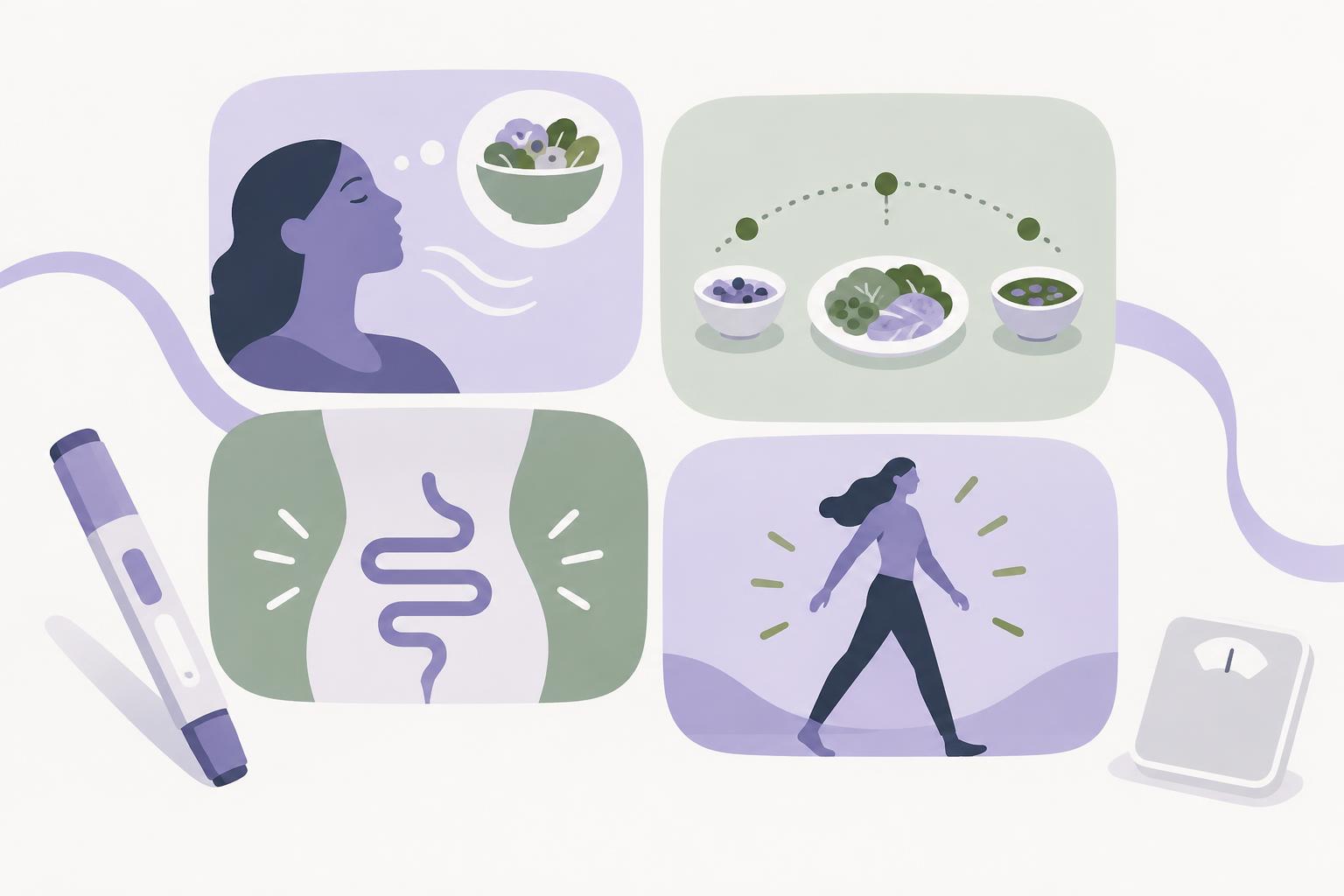
I've come to think a useful glp 1 app should remember how lunch went, alongside the number you logged at 7am. The first thing most people log on a GLP-1 medicine is weight, usually before coffee, usually with a small prayer. Fair enough. I want appetite, fullness, eating and daily capacity on the same page, so you don't have to reconstruct the week at your next appointment.
Lunch arrives and you're full after four forkfuls. The portion that used to be normal sits there, and you're trying to decide whether another bite is sensible. Mid-afternoon there's a wave of nausea that may be the medicine, the heat, or the fact that you haven't had a drink since 10am. By evening you're not hungry, which feels like a win until you realise you've eaten maybe 40 grams of protein all day and your legs feel heavy on the stairs. You search “tired on semaglutide”, then “no appetite but exhausted”, then “constipation on GLP-1”. You can remember the weight you logged this morning. Remembering what you drank on Tuesday takes considerably more effort, especially when it's midnight and you're trying to work out what to tell your prescriber.
Common Questions
What should I track on a GLP-1 besides weight?
Track appetite, fullness, what you ate, protein, fluids, digestion and how much capacity you had that day. Add your medicine's name, dose day and any resistance training. Those details give your prescriber a clearer description of your week than a weight trend alone, particularly when familiar meals suddenly feel difficult.
How often should I weigh myself?
Once a week, on the same day and at the same time, can be a useful starting routine unless your clinician has asked for something different. Daily numbers vary with water and digestion. Keep the other daily details alongside weight so a single number doesn't become your whole account of the week.
Can a log explain symptoms or guide dose changes?
A log can show that nausea tends to land the day after your dose, but patterns can't prove what caused a symptom. Medication decisions stay with your prescriber; day size only changes optional habits. Bring the timing, severity and eating details to your appointment so there's something concrete to discuss.
How the medicine changes the signals
GLP-1 is a hormone, a chemical messenger, released by your gut after you eat. It helps manage blood sugar and talks to the parts of your brain that handle appetite and fullness. The medicines grouped under the GLP-1 label act on that signal, and some also act on a second hormone pathway, so write the name of yours at the top of your log.
They also slow gastric emptying, which means food leaves your stomach more slowly. That helps explain why fullness arrives early and a familiar portion suddenly feels enormous. The effect varies, but the practical question remains: how did eating actually feel today?
Hunger can go quiet. I find this is the moment most food logs fall apart, because they were built around hunger. An instruction to “eat when hungry” leaves quite a lot undecided when lunch ends after four forkfuls.
The nerdier distinction worth keeping is between the appetite signal, the feeling in your stomach and the food you managed to eat. These are related, but each tells you something different. A low appetite score can't tell you how much protein you had. An entry saying “lunch” can't tell you whether you felt nauseated afterwards.
Start with three separate entries at lunch: hunger, fullness and eating.
What a glp 1 app should ask you each day
Here's the short list I'd want beside weight:
- Protein. A rough count, or a simple yes or no per meal. Protein is a priority when appetite drops, to help protect muscle.
- Fluids. Glasses, bottles, whatever you'll actually count. In a hot climate like the UAE, this deserves attention alongside food.
- Digestion. Nausea, reflux and constipation, in plain words: none, mild, bothersome.
- Strength work. Did you do any resistance training this week? Keep the activity visible alongside what you ate.
- Capacity. Your morning state: sleep, energy, tension and mood.
- Dose day. So you can see whether the rough days cluster around it.
Weight still goes in. It already gets plenty of attention.
I want the goal visible too: keeping food, fluids and strength work manageable while following the plan agreed with your clinician. Otherwise, tracking can become another collection of numbers with no decision attached. Instagram is very generous with extra things to do.
A protocol is a repeatable plan built for a goal. For someone already following a meal or training routine, that means keeping the useful steps together and adjusting optional effort to today's capacity. The GLP-1 protocol tracker describes how a clinic plan can sit alongside the daily view.
Keep your existing supplements and routines visible as well. A note about nausea is more useful when you can also see what you ate and did that day. Start with the entries you'll actually keep for seven days.