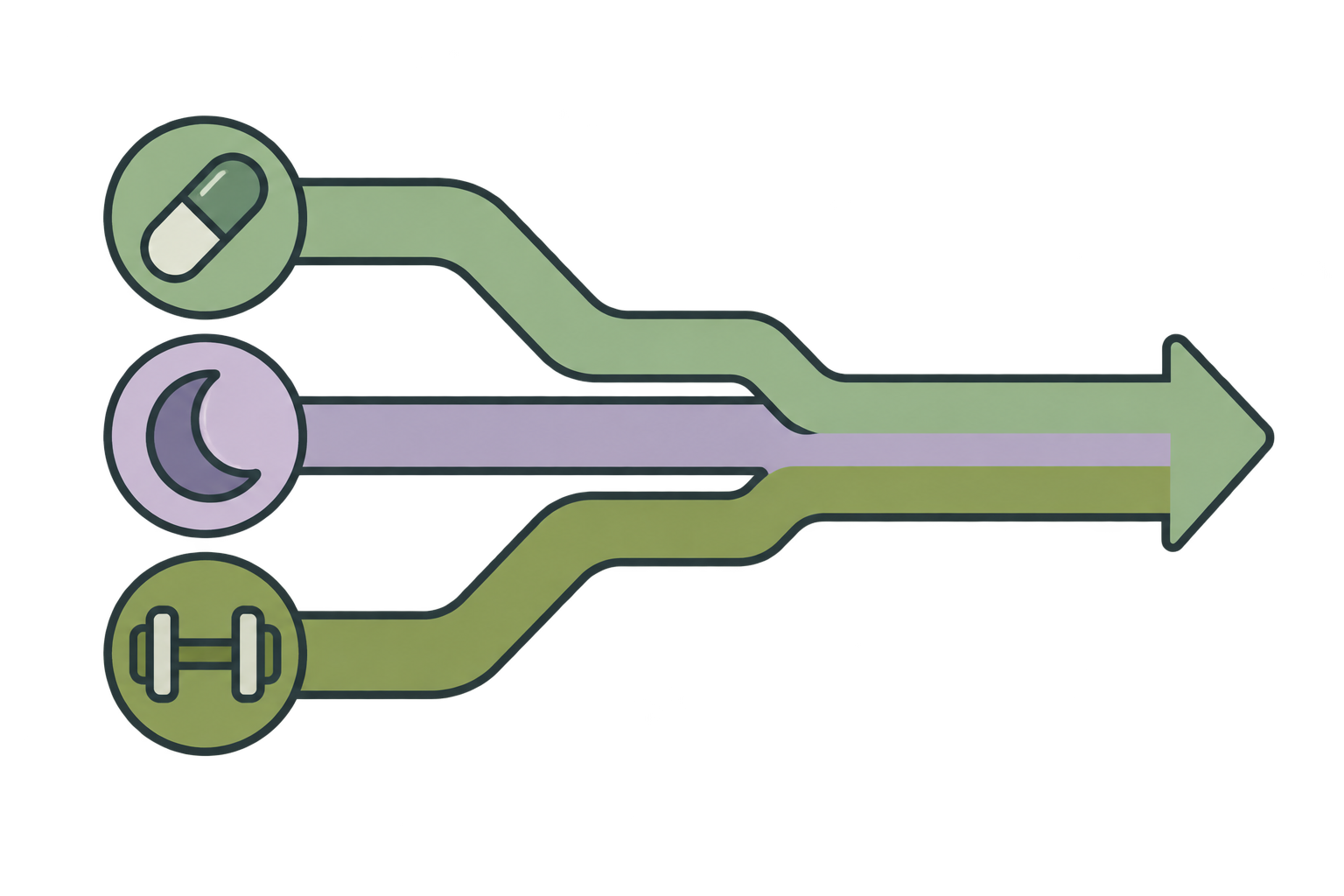
A wellness routine tracker earns its place when it puts supplements, sleep and training into one plan, so you can see how they affect each other. Count the apps: one for workouts, one that nags about water, a sleep score on your watch, supplement reminders in a notes file, and a skincare routine living entirely in your head. That's a lot of supervision for one body.
Your watch says sleep was poor. Your training app says today is legs. Your magnesium reminder goes off during dinner with friends, and you haven't had water since the school run. You do the session anyway, sleep badly again, and by Thursday you're tired but wired, with heavy legs and the 3pm fog that no coffee fixes. You search for “why am I tired but wired” or “best supplement tracker,” then wonder whether “how to track sleep and exercise” would get you closer. You can remember doing the routine; remembering its timing alongside everything else takes more effort. You have plenty of instructions. What you can't easily see is which optional step makes sense in today's state, or what keeps happening before another poor night.
Common Questions
What should a wellness routine tracker include?
A wellness routine tracker should include supplements, sleep, training and anything else you do on purpose, with a goal and timing for each. A daily check-in helps size optional steps to today's capacity. Keeping those details together makes it easier to notice late sessions beside early bedtimes or duplicated supplement ingredients.
Can I track supplements and training together?
Yes, and it helps when they serve the same goal. Timing matters for both, and seeing them alongside sleep makes the plan easier to review. Record what you already take and do before adding anything. Start by looking at the session time, supplement timing and bedtime on the same day.
Do I need a wearable?
No. If you have one, Plus can read the numbers from a screenshot of your watch or ring app, or you can type them in; there's no live sync. Your own check-in is the starting point. Sleep, energy, tension and mood give you something to record even when you have no device reading available.
How many habits should I track?
Start with what you already do, then add one thing at a time. Give each routine a goal and identify its gentle version before expanding it. A useful first week is seven days of recording the existing plan, including when you slept and trained, without introducing another optional step.
What a wellness routine tracker should hold together
Sleep, training and supplements are three views of the same system. Very hard training right before bed raises arousal, the level of alertness in your body, just as you're trying to wind down. Short sleep makes the same session feel harder and can slow recovery. Some supplements belong with food, some away from coffee or other products, and a few duplicate each other.
Each app is right about its own routine. None of them knows about the others. Three completed routines can still leave you with a late session, an early bedtime and no useful way to compare the two.
I prefer one plan with fewer steps to three perfect plans that compete for the same evening. A protocol is a repeatable plan built for a goal: the steps, when they happen, and what changes on a rough day. You can browse protocols with that definition in mind, starting with a familiar sleep, supplement or training routine.
Completion is easy to count. Tonight, put your session time beside your intended bedtime.
The nerdy bit: sleep pressure and timing
Two processes run your sleep. Sleep pressure, the growing need to sleep driven by a chemical called adenosine, builds the longer you're awake. Your circadian rhythm, the roughly 24-hour clock set mostly by light, helps determine when sleep comes easiest. Training, caffeine and late screens can affect alertness or sleep timing.
Caffeine blocks adenosine's signal for hours. In one home sleep study, a large dose taken six hours before bed still cut total sleep noticeably, so a 4pm coffee can still be working at 10pm. Evening training is a different story: a review of 23 studies found that exercise in the evening generally doesn't harm sleep, with one possible exception, vigorous sessions ending within about an hour of bedtime. You can still train in the evening; timing and intensity belong in the record.
I like this part of the science because it explains so many “I slept badly and I don't know why” mornings. A sleep score offers a number. It doesn't remember your coffee unless you record it.
Good sleep has several dimensions, including regularity and timing as well as hours. That's a good reason to log when you slept as well as how long. Patterns don't prove cause. Keep bedtime, the session and the last coffee together for seven days, then continue looking across weeks.